
From the Margins to Leadership
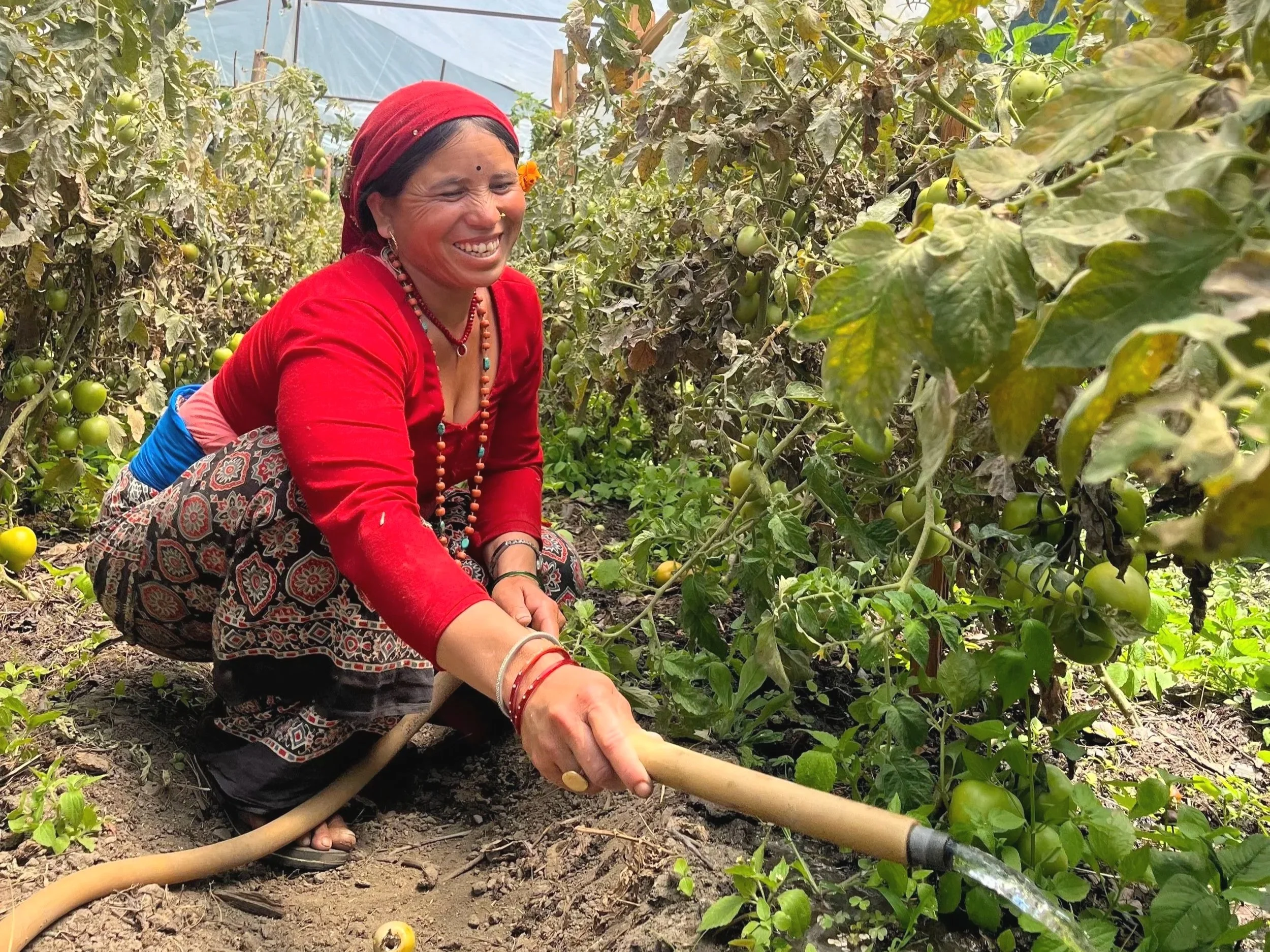
Punna Didi’s journey from survival to dignity in the hills of Kalikot
Punna Didi begins her mornings before most people are awake. Some days she is on the farm checking the vegetables. Other days, she gives baths to the buffaloes or milks them, and some days she is out in the jungle cutting grass. Around her are other women working alongside her, women she now leads through Karnali Ratna Private limited, a profit-based local company under the Oda Foundation Nepal, that supplies vegetables and milk to the foundation itself and, if enough, to the villagers while also running its canteen.
Watching her talk confidently with a smile about her hardship, it is difficult to imagine that there was once a time when villagers refused to eat food cooked by her simply because she belonged to the Dalit community. I laugh when I think about it now, she says. Back then, people used to leave events without eating if they knew I was cooking.
Punna got married at around fifteen years old and was widowed before she was twenty-three. In the beginning, she says, married life was stable. But everything changed after her sister-in-law eloped at the age of thirteen. Her husband left for India to search for her and died during the Kedarnath floods on the journey. The family only learned about his death a month later when a villager returned from India with the news. A few months after that, her father-in-law also died, leaving behind a household made up almost entirely of women: Punna, her mother-in-law, her daughters, and her sister-in-law. Although there was a brother-in-law in the family, she says he paid little attention to them.
Suddenly widowed with two daughters, Punna found herself carrying the full burden of survival in a village where being poor, being Dalit, being a widow, and having daughters instead of sons all carried their own forms of stigma. How would a person like me educate my two daughters? she remembers thinking. Work was scarce. Once or twice a week, if she was fortunate, she found labor work carrying heavy loads from the road up to the village, earning around seven hundred rupees at a time. For nearly two years, this was how she survived and supported her family.
During those years, she says she cried constantly. Villagers threw stones at her house during the night. Others mocked her for having daughters. What will you do with your daughters? people used to say. They will leave eventually. Even within the family, discrimination remained present. She recalls how her daughters were sometimes given separate food from the sons in the household. When my younger daughter was born, I was not even properly fed because she was a girl, she says quietly. But my daughters are also my sons. I love them the same.
Everything began to shift when Oda Foundation approached her and asked if she would come work at the foundation farm. At the time, the farm and animal care work were still at an early stage. Purna began alone, tending land, looking after chickens and buffaloes, and slowly helping build the agricultural work from level zero. But in the beginning, even getting to work was difficult. She walked long distances carrying one daughter while the other held onto her hand. Eventually, because the commute became too difficult, the foundation built a small room where she and her daughters could stay.
That is when my days of happiness started, she says.
Living at the foundation changed not only her economic condition, but also her understanding of love and dignity. Volunteers and guests from inside and outside Nepal regularly stayed at the foundation, and she remembers being deeply affected by the kindness they showed her and her children. There used to be so many foreigners, she says, smiling softly. They gave so much love to my daughters and to me, too. In a way, I learned about love from the guests and people here. They would ask me if I had eaten, ask me how I was while working, and tell me to rest.
For a woman who had spent years feeling unwanted and looked down upon, these small acts remained unforgettable and deeply affected, shaping the woman she is today.
Even then, caste discrimination continued to shape everyday life in the village. During events at the Oda Foundation in its early years, many villagers invited for meals refused to eat food prepared by Punna because she was considered “untouchable.” She remembers one particular incident when a villager came to buy buffalo milk from the farm and asked if someone other than Punna could milk the buffalo. The CEO of the foundation told him there was nobody else available and that he could leave if he did not want the milk. Slowly, attitudes began to shift. Now many of the same people who refused before take milk from here, she says letting out a wry laugh. Nothing happens now.
Over the years, Punna also began receiving agricultural and farming training through the foundation, travelling outside Kalikot for the first time to places like Surkhet, Jumla, and even Kathmandu. These journeys marked a personal transformation on Punna’s life. At the time she first attended these training sessions, Punna could neither read nor write. Through basic literacy classes at the Foundation, she learned to read and write in Nepali script. Today, she keeps the written record of milk supply of Karnali Ratna.
When she travelled to Kathmandu years ago to leave her elder daughter at Nawa Asha Griha Nepal (NAG), where she now studies with support from Oda, the city overwhelmed her. There were vehicles everywhere, roads, buildings everywhere, she recalls. Punna speaks about the education of here daughters with immense pride. My daughters getting an education is the biggest thing for me, she says. Even if villagers do not do good for us, I believe people from this country and outside this country will.
Now, years after first arriving at the foundation as a struggling single mother from the marginalized community, Punna leads Karnali Ratna, which employs three other women from backgrounds similar to her own. In a village where widows and Dalit women were once pushed to the margins, she has now become both provider and leader.
My heart is strong now, she says. Tears do not fall that easily anymore. But I cried a lot in the past.
Punna didi’s story reflects the transformation that becomes possible when women who have long been denied and pushed to the margins are given dignity, work, learning opportunities, and community support. Her journey of survival and transformation is not just her own, but the gradual changes that take place within an entire community. In Punna’s life, change did not arrive all at once. It happened gradually, through fields planted by hand, daughters sent to school, milk once refused and later accepted, and a woman who continued working even while the world around her told her she was worth less.